Clear answers about what students do, what they need, and where the project came from.
What is Physical AI?
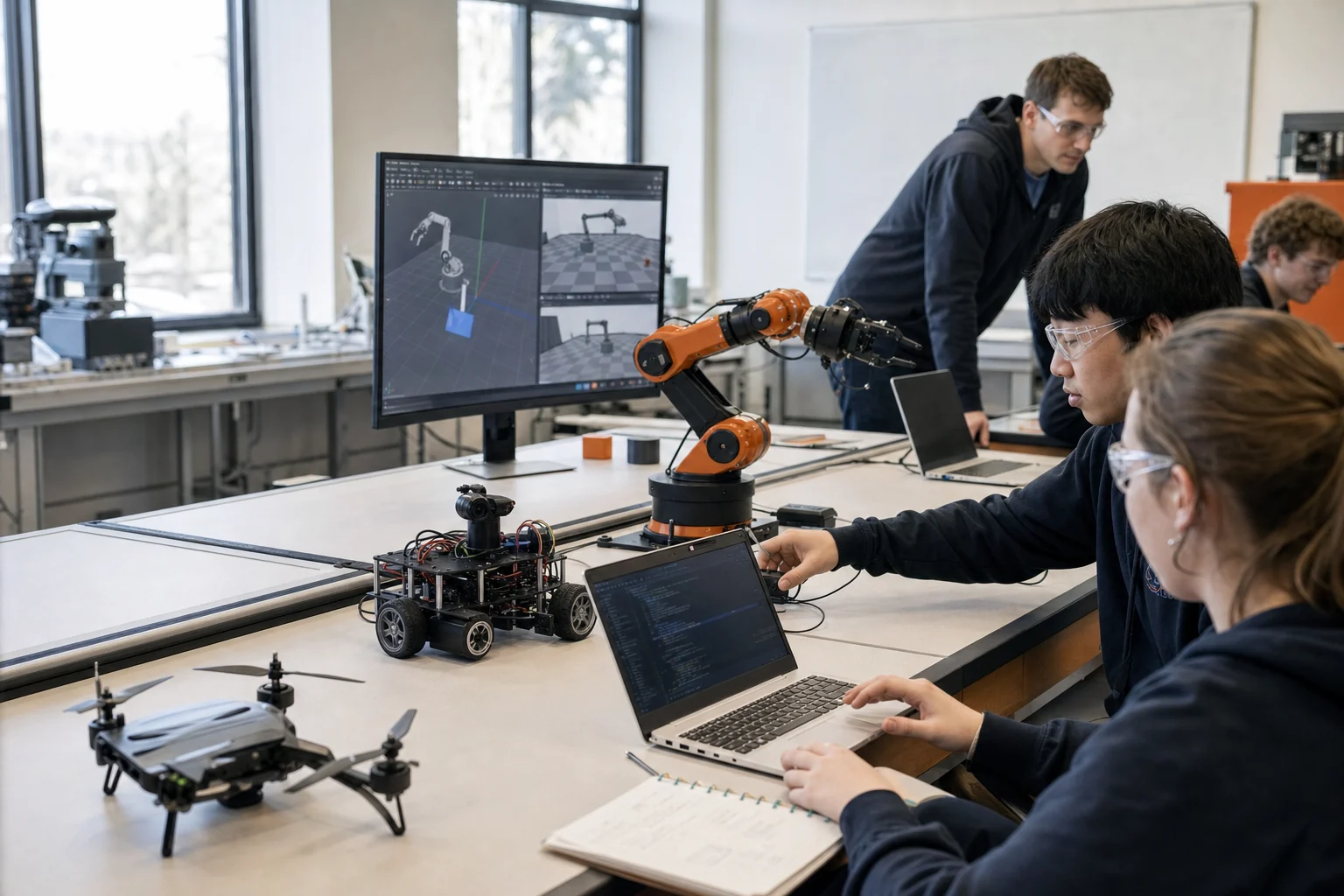
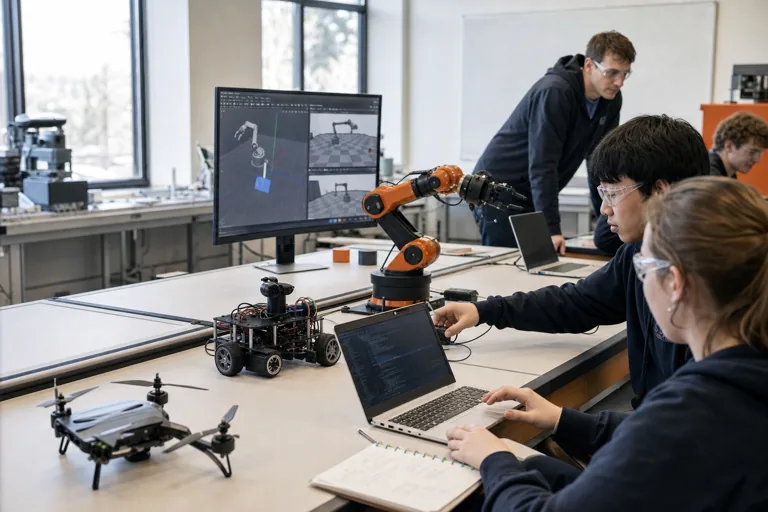
Physical AI is AI that uses cameras or sensors to understand what is around it and then chooses a physical action. A robot arm that sees a block and picks it up is one example.
Do students need to own a robot?
No. Every course can begin with a robot shown on the computer or with a saved recording of a completed run. Real hardware is optional and is used only with approval, direct supervision, movement limits, and an immediate stop button.
Which course should a beginner choose?
Students new to robotics can start with LeKiwi, the Georgia Tech sensor and position course, Stanford CARLO, or the RoboMaster practice mode. We then recommend the next course based on the student's coding, math, and computer experience.
Are these official university courses?
University and lab names show where each public project came from. CIT independently designed these courses; they are not official university courses, partnerships, or endorsements.
What does a student build beyond reproducing an experiment?
Every course adds a course-specific function and a clear operator interface. Selected courses also include an optional LLM tool that can explain saved evidence or draft an allowlisted plan, but it cannot send robot commands or bypass human approval. The final application is tested on normal, boundary, and failure cases.
How can this work show research understanding in a college application?
The student first explains the university research question, why it matters, the method, evidence, and limits. The student then demonstrates a feature and interface they designed, shows tests and failed revisions, and identifies what remains unresolved. A university name or course title alone is not admissions evidence and never guarantees admission.
Why is RoboMaster included?
RoboMaster lets students connect voice, gesture, camera, Wi-Fi, distance sensors, movement, and emergency stopping in one robot. That makes it a clear Physical AI project.
Are Physical AI courses available online or in person, in one-to-one or small groups?
Yes. CIT offers online and in-person classes in Apgujeong, Gangnam-gu, Seoul, with one-to-one and small-group options. Students can run simulations, review examples, record experiments, and explain results in every format. Hardware activities are adjusted to the student's setup, and current availability is confirmed during consultation.