College application research evidence · understanding and original contribution · Seoul and online
Project courseThe student keeps the work and the record they made.
UIUC LeKiwi: Build and Test a Simulated Robot
Grades 9-12: mobile robots with arms, how floor friction...
Where this course comes fromThe universities and labs named here made the open projects or materials this course draws on. CIT designed the course independently; it is not an official, affiliated, or endorsed course of those institutions.
- UIUCOpen project it is built on
- Free consultation and level check
- Apgujeong classroom or online
- One-to-one or small group
- Registered academy no. 11882

Is UIUC LeKiwi: Build and Test a Simulated Robot a good fit for high school students in Grades 9-12?
UIUC LeKiwi: Build and Test a Simulated Robot is a good fit for students in grades 9-12 who are interested in mobile robots with arms and how floor friction changes motion. CIT offers online or in-person lessons in Apgujeong, Gangnam, Seoul, in one-to-one or small-group formats. Students make a LeKiwi robot design tool, a before-and-after motion viewer, and collision-warning code with tests.
The course is built on an open project published by UIUC. With no physical robot and only an ordinary laptop, students open the LeKiwi simulated robot, read its body, joint, and motor settings, and locate its camera and sensors. After driving the wheels and moving the arm, they change only weight or floor friction and compare how the motion changes. From those results they build a design tool that checks a chosen wheel size, joint range, and weight for joint limits and collision risk before a route runs. The student then designs and tests an extension of their own: a new question, feature, model, interface, or solution. In an application or interview, the student separates the source research from their own decisions, results, failed attempts, revisions, and limits.
Google sign-in is required. Existing account permissions determine access.
My child found the AI classes interesting and stayed with them. It made for a worthwhile school break. Thank you for teaching so attentively.
- Age group
- Grades 9-12
- Academic subject
- AI & Data, Engineering & Robotics, Physics & SpaceBrowse subject
- Course type
- Course
- Format
- Online or Apgujeong in person · one-to-one or small group
- Teaching language
- Korean by default, with complete English materials
- Curriculum status
- Lesson-readyEvery learning item includes the evidence, worked example, practical work, and tutor guidance required by CIT's lesson-ready standard.
From open research to student-owned work
Students inspect a relevant public source, reproduce the idea, then add an original question, feature, or test. The material this course reads was made at UIUC. Names identify the source, not affiliation or endorsement.
- UIUCOpen project it is built on
How can I explain this course to my child?
If questions about mobile robots with arms or how floor friction changes motion keep making you ask why, UIUC LeKiwi: Build and Test a Simulated Robot lets you investigate the question with evidence, then build and defend an extension of your own.
Which interests suggest this course?
- mobile robots with arms
- how floor friction changes motion
- joint limit and collision warnings
What does the student finish?A LeKiwi robot design tool, a before-and-after motion viewer, and collision-warning code with tests.
Is this a good fit?
A strong fit for students who want to understand, build, test, or responsibly use AI systems.
Course placement follows current subject and coding readiness.
Students should be ready to document sources, methods, and limits.
Advanced tools are introduced after a clear baseline.
What will my child learn?
- Explain how the robot's body layout and joint and motor settings affect its motion.
- Change only weight or floor friction and compare motion through the same waypoints.
- Define the checks that catch joint limits and collision risk in chosen settings before a route runs.
- Replay motion before and after a settings change side by side and explain what that one change did.
- UIUCOpen project it is built on
How does the course progress?
- 1Understanding the Research Question and Baseline Behavior
Open the LeKiwi simulated robot on an ordinary laptop and read its body, joint, and motor settings.
- 2Connecting Sensors, Actions, and Measurements
Locate the camera and sensors, then drive the wheels and move the arm, comparing runs through the same waypoints.
- 3Building a Feature and Control Screen from Evidence
Change only weight or friction to compare motion, then code a check that warns about joint limits and collisions before a route runs.
- 4Testing the Integrated App and Explaining the Design
Connect a screen that picks settings and replays motion before and after a change, then test the finished design tool.
What counts as useful evidence?
A LeKiwi robot design tool, a before-and-after motion viewer, and collision-warning code with tests.
What should an admissions reader be able to see?
The course is built on an open project published by UIUC. The student works out what those researchers were trying to learn, why the question matters, and how they tested it, then designs and tests an extension of their own: a new question, feature, model, interface, or solution. In an application or interview, the student separates the source research from their own decisions, results, failed attempts, revisions, and limits.
Useful evidence may include a documented dataset, baseline comparison, model evaluation, error analysis, and a clear record of the student's own decisions.
These names identify who published the open project the course starts from. The evidence an application reads is what the student understood, completed, and can explain.
The real research project this course reads
- SIGRobotics-UIUC/LeKiwi-sim
- pinned commit
c3e38133450b - commit date 2025-02-23
- licence No license file found at review; inspect upstream terms before reuse
- text files 5
The student changes one value in a robot model file and sees how the motion changes. In class the project is separated into five boxes (input, memory, process, output, control). The lesson opens one of them, changes one value, and leaves the rest closed.
- Inputopened hereWhat comes in?
The model files that write the robot's links, joints, wheels and the floor as numbers
- MemoryWhat persists?
Joint angles and speeds are held by the physics program while it runs
- ProcessWhat transforms?
Solving forces and contacts happens in the physics program, not in this repository
- OutputWhat leaves, and who uses it?
The picture and the logs appear while it runs and are not kept here
- ControlWhat decides when anything runs?
How many steps run, and when, is decided by whatever program loads this model
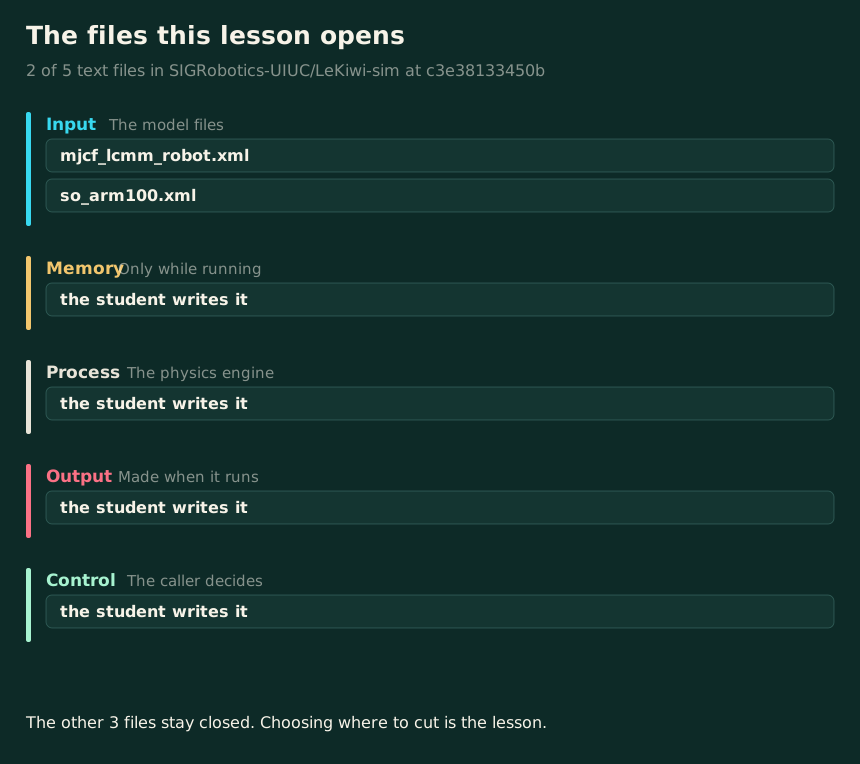
InputThe model files
- mjcf_lcmm_robot.xml
- so_arm100.xml
MemoryOnly while running
- the student writes it
ProcessThe physics engine
- the student writes it
OutputMade when it runs
- the student writes it
ControlThe caller decides
- the student writes it
The files the lesson opens, by name. The course is not a walk through the repository; it opens a chosen few and says which.
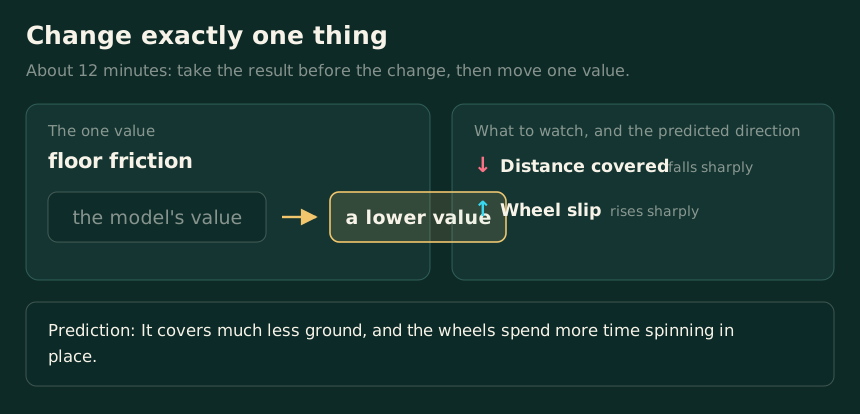
One value moves and everything else stays. The right-hand column is the prediction written before the run, not a result; the work is reconciling the two.
On a narrow screen, swipe the picture sideways.
The universities and labs named here made the open projects this course reads. CIT designed the course independently; it is not an official, affiliated, or endorsed course.
- UIUCOpen project it is built on
Questions parents search before choosing this course
Is UIUC LeKiwi: Build and Test a Simulated Robot a good fit for high school students in Grades 9-12?
UIUC LeKiwi: Build and Test a Simulated Robot is a good fit for students in grades 9-12 who are interested in mobile robots with arms and how floor friction changes motion. CIT offers online or in-person lessons in Apgujeong, Gangnam, Seoul, in one-to-one or small-group formats. Students make a LeKiwi robot design tool, a before-and-after motion viewer, and collision-warning code with tests.
Can my child take UIUC LeKiwi: Build and Test a Simulated Robot online or in person, one-to-one or in a small group?
Yes. CIT offers online and in-person lessons at its Apgujeong academy in Gangnam, Seoul, with one-to-one and small-group options. A readiness consultation confirms the available format and starting point for the course.
Does my child need prior subject knowledge or coding experience for UIUC LeKiwi: Build and Test a Simulated Robot?
Course placement follows current subject and coding readiness. Students should be ready to document sources, methods, and limits. Advanced tools are introduced after a clear baseline.
What will my child make or practice in UIUC LeKiwi: Build and Test a Simulated Robot?
The main evidence is a LeKiwi robot design tool, a before-and-after motion viewer, and collision-warning code with tests. Students also document decisions, tests, feedback, and limits in age-appropriate language.
How can UIUC LeKiwi: Build and Test a Simulated Robot show research understanding in a college application?
The course is built on an open project published by UIUC. The student works out what those researchers were trying to learn, why the question matters, and how they tested it, then designs and tests an extension of their own: a new question, feature, model, interface, or solution. In an application or interview, the student separates the source research from their own decisions, results, failed attempts, revisions, and limits. Useful evidence may include a documented dataset, baseline comparison, model evaluation, error analysis, and a clear record of the student's own decisions.
How are the schedule and tuition for UIUC LeKiwi: Build and Test a Simulated Robot determined?
CIT confirms the student's readiness, goal, location, class size, and current availability before recommending a course plan. The consultation and level check are free; tuition is explained before enrollment.
When should a student start?
There is no fixed intake month. CIT reviews the student's current school term, readiness, and available hours, then names the point in the course where they should begin.
I appreciated that a simple early idea was extended into an 'AI debate tool'. My child has always been interested in debate and social issues, so seeing that interest connect to the project makes me expect a more complete and distinctive result.
Where else parents check CIT
Choose the course after a readiness check
CIT can compare this course with nearby options by age, subject, and current preparation.