College application activity evidence · student decisions and revision · Seoul and online
Competition entryBuilds an entry for a competition.
Research Human-AI Interfaces for KSEF
Placement by readiness: gesture recognition, why...
- Free consultation and level check
- Apgujeong classroom or online
- One-to-one or small group
- Registered academy no. 11882

Is Research Human-AI Interfaces for KSEF a good fit for students placed by current readiness?
Research Human-AI Interfaces for KSEF is a good fit for students whose starting point should be set by current readiness who are interested in gesture recognition and why recognition models fail. CIT offers online or in-person lessons in Apgujeong, Gangnam, Seoul, in one-to-one or small-group formats. Students make a gesture-controlled interaction demo, a research plan with a dated lab notebook, and a report and presentation with an AI-use log.
Students direct an AI coding agent (Claude Code) to build an interface that reacts to key presses, then add input signals from an image classifier trained on hand gestures and a smile score calculated from facial landmarks. They log how the interface is used and check where recognition fails with reaction-time distributions, correlations, and confusion matrices, then set a topic, hypothesis, and variables against the current year's KSEF guidelines. Students run the experiments and write the report themselves, and the webcam demo runs without recording or saving, with consent and stop instructions. The student keeps a submission record they can explain themselves: the problem they chose, their solution, failed attempts, revisions, and limits.
Google sign-in is required. Existing account permissions determine access.
It was our first computing competition, so we did not know where to begin. The teachers guided us step by step from the start, and we were able to prepare for that first attempt.
- Age group
- Placement by readiness
- Academic subject
- AI & Data, Engineering & Robotics, Research & PortfolioBrowse subject
- Course type
- Competition preparation
- Format
- Online or Apgujeong in person · one-to-one or small group
- Teaching language
- Korean by default, with complete English materials
- Curriculum status
- Learning studioA structured learning studio with goals, deliverables, and follow-up work is available. Tutors confirm supporting materials before delivery.
From open research to student-owned work
Students inspect a relevant public source, reproduce the idea, then add an original question, feature, or test. Every source is public, and each lesson names the exact page it opens.
How can I explain this course to my child?
If you enjoy pushing through hard questions about gesture recognition or why recognition models fail, Research Human-AI Interfaces for KSEF helps you turn that interest into a solution you can test, revise, and explain as your own.
Which interests suggest this course?
- gesture recognition
- why recognition models fail
- hypothesis-driven experiments
What does the student finish?A gesture-controlled interaction demo, a research plan with a dated lab notebook, and a report and presentation with an AI-use log.
Is this a good fit?
A strong fit for students who want to understand, build, test, or responsibly use AI systems.
Placement follows a short readiness check.
Beginners may start with guided templates.
More experienced students receive a deeper implementation path.
What will my child learn?
- Run the program an AI agent built, check it, and ask for specific fixes.
- Find through experiments when lighting, angle, or a different user makes the gesture model fail, and add data.
- Remeasure recognition on separate training and test data and use a confusion matrix to find which gestures get mixed up.
- Turn a research question into a hypothesis and variables, and write the plan, lab notebook, and report themselves.
How does the course progress?
- 1Making Signals: Hand Gestures and Faces as Numbers
Build a first interface with an AI agent, train a hand-gesture classifier, and calculate a smile score from facial landmarks.
- 2From Signal to Response: Completing the Interface
Receive webcam signals in real time, smooth jittery values, and finish a demo where the screen and sound respond.
- 3Checking with Data: Does It Really Recognize?
Log usage as table data and check recognition with reaction-time distributions, correlation, and confusion matrices.
- 4KSEF Research Design
Check the KSEF guidelines, compare topic ideas, summarize prior research, and write a plan with defined variables.
- 5Running and Producing: Experiments, Report, and Presentation
Run repeated experiments, compare results with the hypothesis, and prepare the report and presentation themselves.
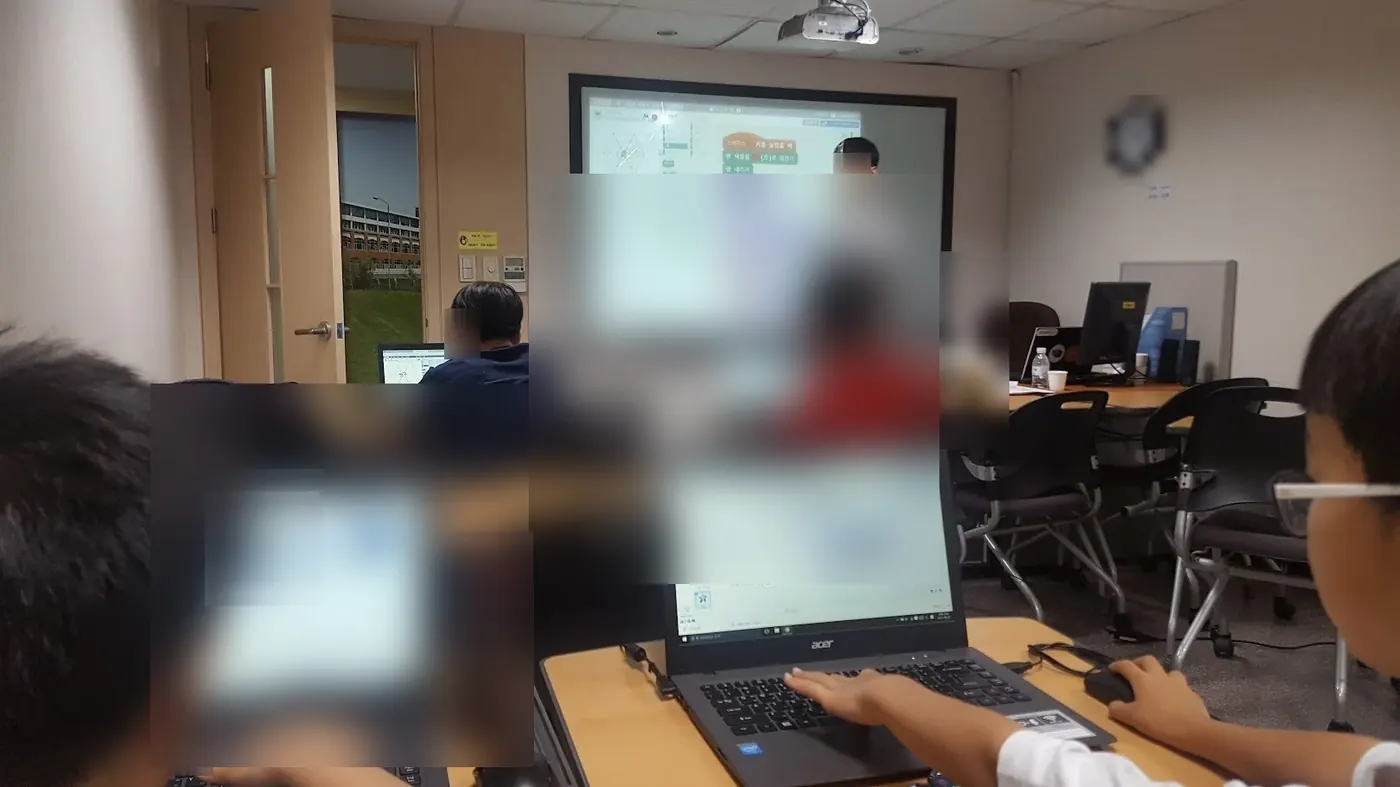
What counts as useful evidence?
A gesture-controlled interaction demo, a research plan with a dated lab notebook, and a report and presentation with an AI-use log.
What should an admissions reader be able to see?
The student keeps a submission record they can explain themselves: the problem they chose, their solution, failed attempts, revisions, and limits.
Useful evidence may include a documented dataset, baseline comparison, model evaluation, error analysis, and a clear record of the student's own decisions.
The evidence an application reads is what the student understood, completed, and can explain.
Questions parents search before choosing this course
Is Research Human-AI Interfaces for KSEF a good fit for students placed by current readiness?
Research Human-AI Interfaces for KSEF is a good fit for students whose starting point should be set by current readiness who are interested in gesture recognition and why recognition models fail. CIT offers online or in-person lessons in Apgujeong, Gangnam, Seoul, in one-to-one or small-group formats. Students make a gesture-controlled interaction demo, a research plan with a dated lab notebook, and a report and presentation with an AI-use log.
Can my child take Research Human-AI Interfaces for KSEF online or in person, one-to-one or in a small group?
Yes. CIT offers online and in-person lessons at its Apgujeong academy in Gangnam, Seoul, with one-to-one and small-group options. A readiness consultation confirms the available format and starting point for the course.
Does my child need prior subject knowledge or coding experience for Research Human-AI Interfaces for KSEF?
Placement follows a short readiness check. Beginners may start with guided templates. More experienced students receive a deeper implementation path.
What will my child make or practice in Research Human-AI Interfaces for KSEF?
The main evidence is a gesture-controlled interaction demo, a research plan with a dated lab notebook, and a report and presentation with an AI-use log. Students also document decisions, tests, feedback, and limits in age-appropriate language.
How does Research Human-AI Interfaces for KSEF support competition and portfolio preparation?
Students move from Making Signals: Hand Gestures and Faces as Numbers to a documented, student-owned submission. Useful evidence may include a documented dataset, baseline comparison, model evaluation, error analysis, and a clear record of the student's own decisions.
How are the schedule and tuition for Research Human-AI Interfaces for KSEF determined?
CIT confirms the student's readiness, goal, location, class size, and current availability before recommending a course plan. The consultation and level check are free; tuition is explained before enrollment.
When should a student start?
Registration and submission windows are fixed by the organiser. CIT checks the time left before deciding how far the project can reasonably go, so an earlier start widens the options rather than the promises.
The teachers are always attentive and considerate, so we feel comfortable trusting them with our child.
Where else parents check CIT
Choose the course after a readiness check
CIT can compare this course with nearby options by age, subject, and current preparation.