Future college-application foundation · student questions and explanations · Seoul and online
Early foundationA first course for younger elementary students.
Pattern Detective
Early years to Grade 2: repeating color patterns...
- Free consultation and level check
- Apgujeong classroom or online
- One-to-one or small group
- Registered academy no. 11882
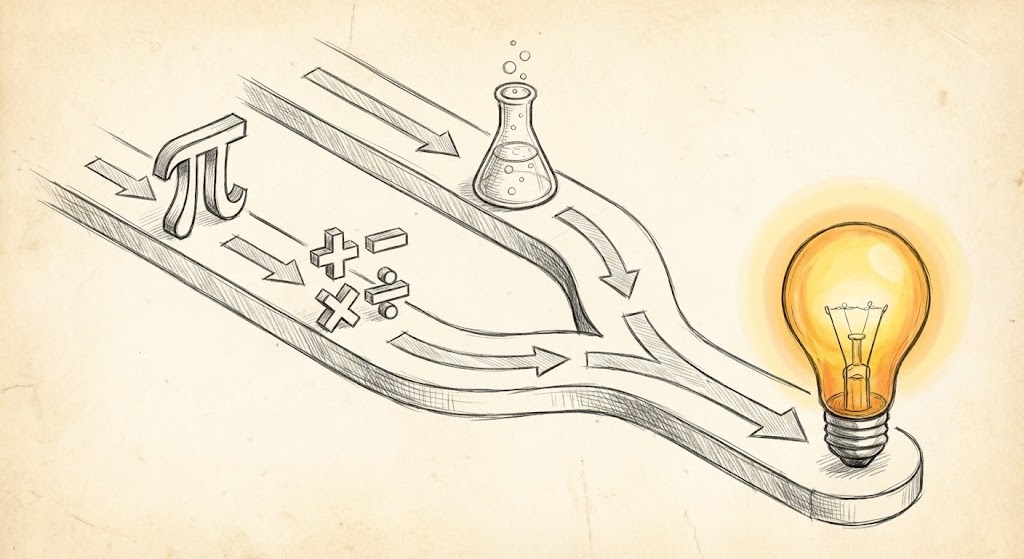
Is Pattern Detective a good fit for young learners through Grade 2?
Pattern Detective is a good fit for students in early years to grade 2 who are interested in repeating color patterns and clap-and-stomp rhythms. CIT offers online or in-person lessons in Apgujeong, Gangnam, Seoul, in one-to-one or small-group formats. Students make a two-color pattern of their own, a table matching letters to codes, and a secret code bracelet with their initials.
Without a computer, children find the rule in rows of repeating colors and shapes, guess what comes next, and fill in missing spots. They invent two-color patterns of their own and turn them into claps and stomps, then use just two signs, on and off, to build a table that turns letters into codes (a first look at binary) and write their initials in it. Last, they string a bead bracelet that spells their initials in code, and family members try to read it using the table. This builds the foundation a college application later rests on: the student asks a question, makes something, revises it, and explains that process in their own words. At this age the habit comes before the artifact.
Google sign-in is required. Existing account permissions determine access.
As soon as my child got home, they showed me the game they had made. They said it was so much fun.
- Age group
- Early years to Grade 2
- Academic subject
- Mathematics & StatisticsBrowse subject
- Course type
- Course
- Format
- Online or Apgujeong in person · one-to-one or small group
- Teaching language
- Korean by default, with complete English materials
- Curriculum status
- Learning studioA structured learning studio with goals, deliverables, and follow-up work is available. Tutors confirm supporting materials before delivery.
From open research to student-owned work
Students inspect a relevant public source, reproduce the idea, then add an original question, feature, or test. Every source is public, and each lesson names the exact page it opens.
How can I explain this course to my child?
If exploring repeating color patterns or clap-and-stomp rhythms makes you want to build instead of only watch or read, Pattern Detective lets you make, test, and improve something of your own.
Which interests suggest this course?
- repeating color patterns
- clap-and-stomp rhythms
- secret code bracelets
What does the student finish?A two-color pattern of their own, a table matching letters to codes, and a secret code bracelet with their initials.
Is this a good fit?
A strong fit for students who need stronger mathematical foundations or want to apply mathematics in science, AI, economics, or research.
No prior coding is required.
The child should be ready to describe choices and ask for help.
A parent may help with accounts or device setup.
What will my child learn?
- Find a repeating rule and name what is missing and what comes next.
- Show the same rule as sounds and movements, and find and fix where a pattern breaks.
- Write letters with only two signs and read them back to check.
- Check whether someone else can read the initials coded in a bead bracelet.
How does the course progress?
- 1Finding the Rule
Find the rule in rows of repeating colors or shapes, fill in missing spots, and invent a new two-color rule.
- 2Making and Extending Patterns
Extend a pattern and count the repeats, turn it into claps and stomps, and fix a row where the rule breaks.
- 3Writing with Two Signs
Group on and off signs, make a table pairing each letter with a group, and code two initials.
- 4Coding It into a Bracelet
Choose a bead color for each sign, string the bracelet in order, and check that family members can read it with the table.
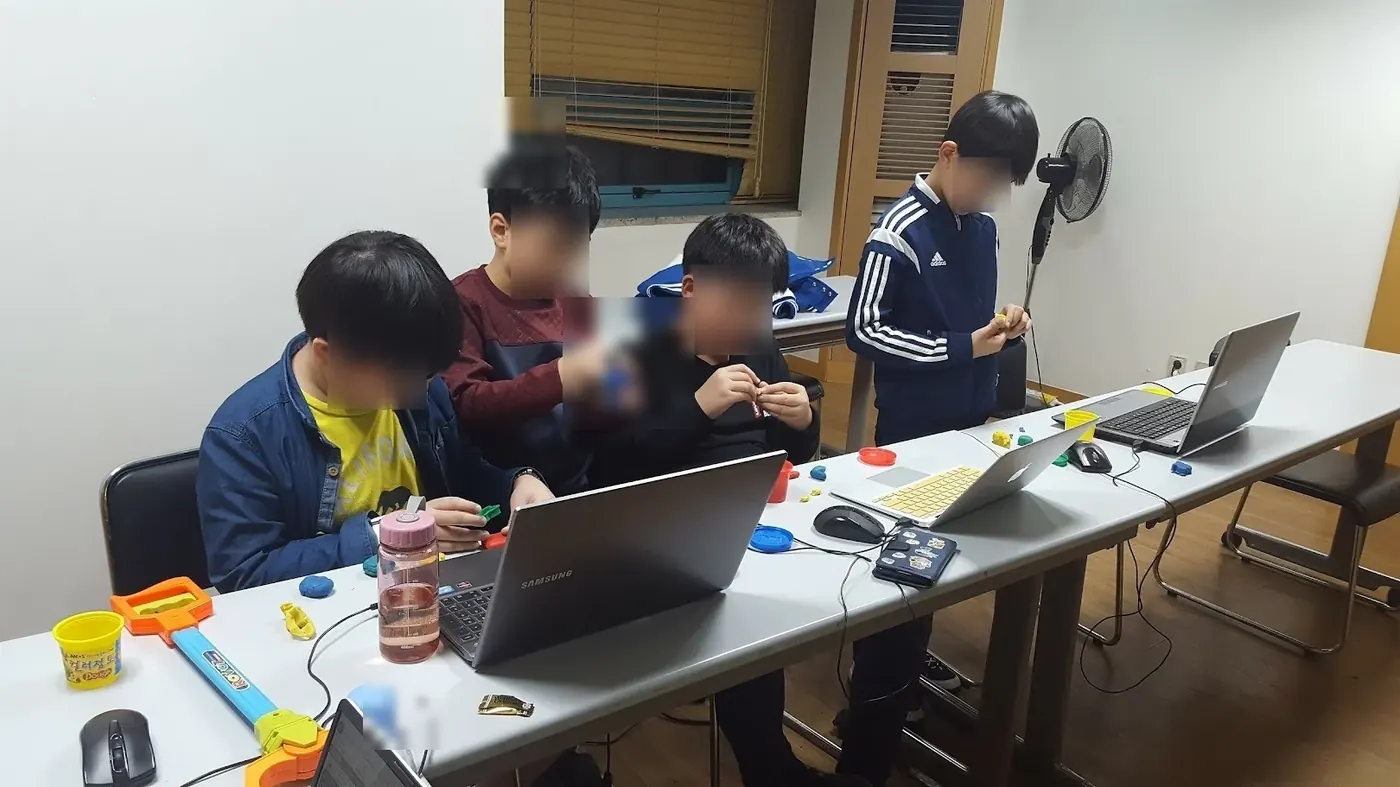
What counts as useful evidence?
A two-color pattern of their own, a table matching letters to codes, and a secret code bracelet with their initials.
What should an admissions reader be able to see?
This builds the foundation a college application later rests on: the student asks a question, makes something, revises it, and explains that process in their own words. At this age the habit comes before the artifact.
Useful evidence may include a clear model, justified assumptions, correct calculations, visualized data, and an explanation of uncertainty.
The evidence an application reads is what the student understood, completed, and can explain.
Questions parents search before choosing this course
Is Pattern Detective a good fit for young learners through Grade 2?
Pattern Detective is a good fit for students in early years to grade 2 who are interested in repeating color patterns and clap-and-stomp rhythms. CIT offers online or in-person lessons in Apgujeong, Gangnam, Seoul, in one-to-one or small-group formats. Students make a two-color pattern of their own, a table matching letters to codes, and a secret code bracelet with their initials.
Can my child take Pattern Detective online or in person, one-to-one or in a small group?
Yes. CIT offers online and in-person lessons at its Apgujeong academy in Gangnam, Seoul, with one-to-one and small-group options. A readiness consultation confirms the available format and starting point for the course.
Does my child need prior subject knowledge or coding experience for Pattern Detective?
No prior coding is required. The child should be ready to describe choices and ask for help. A parent may help with accounts or device setup.
What will my child make or practice in Pattern Detective?
The main evidence is a two-color pattern of their own, a table matching letters to codes, and a secret code bracelet with their initials. Students also document decisions, tests, feedback, and limits in age-appropriate language.
How does my child explain what they made in Pattern Detective?
Children show what they made and explain in their own words why they chose it, what happened when they tried it, and what they changed. At this age, the habit of asking and revising comes before the finished product.
How are the schedule and tuition for Pattern Detective determined?
CIT confirms the student's readiness, goal, location, class size, and current availability before recommending a course plan. The consultation and level check are free; tuition is explained before enrollment.
When should a student start?
There is no fixed intake month. CIT reviews the student's current school term, readiness, and available hours, then names the point in the course where they should begin.
I worried because it was hard to explain to my child why they should learn coding. Being with friends seems to make the classes enjoyable for them.
Where else parents check CIT
Choose the course after a readiness check
CIT can compare this course with nearby options by age, subject, and current preparation.