College application research evidence · understanding and original contribution · Seoul and online
Project courseThe student keeps the work and the record they made.
Practical AI Tools & Machine Learning Foundations
Placement by readiness: safety checks for AI-written...
- Free consultation and level check
- Apgujeong classroom or online
- One-to-one or small group
- Registered academy no. 11882

Is Practical AI Tools & Machine Learning Foundations a good fit for students placed by current readiness?
Practical AI Tools & Machine Learning Foundations is a good fit for students whose starting point should be set by current readiness who are interested in safety checks for AI-written code and image classifier accuracy. CIT offers online or in-person lessons in Apgujeong, Gangnam, Seoul, in one-to-one or small-group formats. Students make a mini game with pre-run check notes, an image classifier with an accuracy table, and a final project with a live demo.
Students learn to read AI agent code to the end, check permissions and network calls, and run it in an isolated folder before making a mini game and a web app with Gemini, Antigravity, and Claude Code. They train an image classifier in Teachable Machine with evaluation images set aside in advance, log what it gets wrong, and plot numeric data in Python to understand regression. Webcam work runs only with consent and without recording, treats face-landmark numbers as expression shapes rather than emotions, and leads into a final project with a live demo. The student sets their own question, then designs and tests a feature, model, interface, or solution of their own. In an application or interview, the student separates the material they drew on from their own decisions, results, failed attempts, revisions, and limits.
Google sign-in is required. Existing account permissions determine access.
My child found the AI classes interesting and stayed with them. It made for a worthwhile school break. Thank you for teaching so attentively.
- Age group
- Placement by readiness
- Academic subject
- AI & DataBrowse subject
- Course type
- Course
- Format
- Online or Apgujeong in person · one-to-one or small group
- Teaching language
- Korean by default, with complete English materials
- Curriculum status
- Lesson-readyEvery learning item includes the evidence, worked example, practical work, and tutor guidance required by CIT's lesson-ready standard.
From open research to student-owned work
Students inspect a relevant public source, reproduce the idea, then add an original question, feature, or test. Every source is public, and each lesson names the exact page it opens.
How can I explain this course to my child?
If questions about safety checks for AI-written code or image classifier accuracy keep making you ask why, Practical AI Tools & Machine Learning Foundations lets you investigate the question with evidence, then build and defend an extension of your own.
Which interests suggest this course?
- safety checks for AI-written code
- image classifier accuracy
- the limits of face landmark measures
What does the student finish?A mini game with pre-run check notes, an image classifier with an accuracy table, and a final project with a live demo.
Is this a good fit?
A strong fit for students who want to understand, build, test, or responsibly use AI systems.
Placement follows a short readiness check.
Beginners may start with guided templates.
More experienced students receive a deeper implementation path.
What will my child learn?
- Read AI-written code to the end and record its permissions, network calls, and run environment before running it.
- Revise prompts while turning a sketch into a web app and run the result to see whether it works as intended.
- Measure accuracy only on images left out of training and log wrong answers by class with likely causes.
- Explain that face-landmark values approximate an expression's shape rather than an emotion, and check where images are processed.
How does the course progress?
- 1AI Agent Coding Basics
Learn a four-step pre-run check and tool age limits, then make an image, a mini game, and a web app with Gemini, Antigravity, and Claude Code.
- 2Machine Learning Basics
Compare rule-based code with machine learning, measure an image classifier on held-out images, and plot data for regression.
- 3Facial Landmarks and Measurement Limits
Compute mouth-corner positions on sample faces, run a webcam demo only with consent, and map blinks or hand gestures to music or games.
- 4Final Project
Plan features and screens, build the core with agent tools and pre-run checks, and explain the process in a live demo.
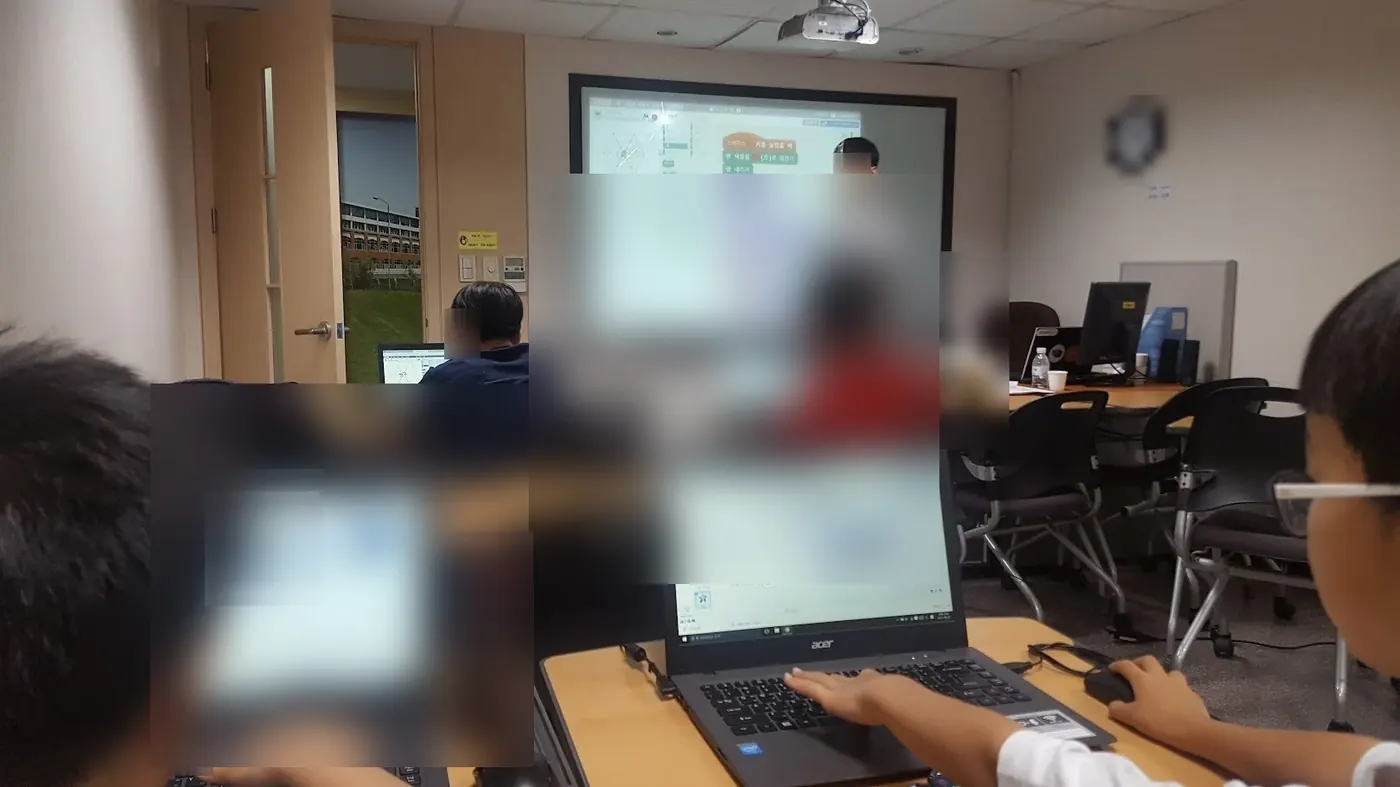
What counts as useful evidence?
A mini game with pre-run check notes, an image classifier with an accuracy table, and a final project with a live demo.
What should an admissions reader be able to see?
The student sets their own question, then designs and tests a feature, model, interface, or solution of their own. In an application or interview, the student separates the material they drew on from their own decisions, results, failed attempts, revisions, and limits.
Useful evidence may include a documented dataset, baseline comparison, model evaluation, error analysis, and a clear record of the student's own decisions.
The evidence an application reads is what the student understood, completed, and can explain.
Open the detailed program pageQuestions parents search before choosing this course
Is Practical AI Tools & Machine Learning Foundations a good fit for students placed by current readiness?
Practical AI Tools & Machine Learning Foundations is a good fit for students whose starting point should be set by current readiness who are interested in safety checks for AI-written code and image classifier accuracy. CIT offers online or in-person lessons in Apgujeong, Gangnam, Seoul, in one-to-one or small-group formats. Students make a mini game with pre-run check notes, an image classifier with an accuracy table, and a final project with a live demo.
Can my child take Practical AI Tools & Machine Learning Foundations online or in person, one-to-one or in a small group?
Yes. CIT offers online and in-person lessons at its Apgujeong academy in Gangnam, Seoul, with one-to-one and small-group options. A readiness consultation confirms the available format and starting point for the course.
Does my child need prior subject knowledge or coding experience for Practical AI Tools & Machine Learning Foundations?
Placement follows a short readiness check. Beginners may start with guided templates. More experienced students receive a deeper implementation path.
What will my child make or practice in Practical AI Tools & Machine Learning Foundations?
The main evidence is a mini game with pre-run check notes, an image classifier with an accuracy table, and a final project with a live demo. Students also document decisions, tests, feedback, and limits in age-appropriate language.
How can a student describe work from Practical AI Tools & Machine Learning Foundations in a college application?
The student sets their own question, then designs and tests a feature, model, interface, or solution of their own. In an application or interview, the student separates the material they drew on from their own decisions, results, failed attempts, revisions, and limits. Useful evidence may include a documented dataset, baseline comparison, model evaluation, error analysis, and a clear record of the student's own decisions.
How are the schedule and tuition for Practical AI Tools & Machine Learning Foundations determined?
CIT confirms the student's readiness, goal, location, class size, and current availability before recommending a course plan. The consultation and level check are free; tuition is explained before enrollment.
When should a student start?
There is no fixed intake month. CIT reviews the student's current school term, readiness, and available hours, then names the point in the course where they should begin.
I appreciated that a simple early idea was extended into an 'AI debate tool'. My child has always been interested in debate and social issues, so seeing that interest connect to the project makes me expect a more complete and distinctive result.
Where else parents check CIT
Choose the course after a readiness check
CIT can compare this course with nearby options by age, subject, and current preparation.