College application research evidence · understanding and original contribution · Seoul and online
Project courseThe student keeps the work and the record they made.
AI + Robotics: Autonomous Systems Lab
Grades 6-8: grid-map path planning, marker-based object...
- Free consultation and level check
- Apgujeong classroom or online
- One-to-one or small group
- Registered academy no. 11882

Is AI + Robotics: Autonomous Systems Lab a good fit for middle school students in Grades 6-8?
AI + Robotics: Autonomous Systems Lab is a good fit for students in grades 6-8 who are interested in grid-map path planning and marker-based object detection. CIT offers online or in-person lessons in Apgujeong, Gangnam, Seoul, in one-to-one or small-group formats. Students make a limited-autonomy rescue robot with a control screen, multi-sensor logs and fault-test records, and an evaluation report and debugging demo.
Students build a limited autonomous rescue robot and a mission-control dashboard that combines distance, line, camera, and motion-sensor status. The interface can start a dry run, request human approval, show a failure reason, and replay the evidence without bypassing the emergency stop. The student sets their own question, then designs and tests a feature, model, interface, or solution of their own. In an application or interview, the student separates the material they drew on from their own decisions, results, failed attempts, revisions, and limits.
Google sign-in is required. Existing account permissions determine access.
My child found the AI classes interesting and stayed with them. It made for a worthwhile school break. Thank you for teaching so attentively.
- Age group
- Grades 6-8
- Academic subject
- AI & Data, Engineering & RoboticsBrowse subject
- Course type
- Course
- Format
- Online or Apgujeong in person · one-to-one or small group
- Teaching language
- Korean by default, with complete English materials
- Curriculum status
- Lesson-readyEvery learning item includes the evidence, worked example, practical work, and tutor guidance required by CIT's lesson-ready standard.
From open research to student-owned work
Students inspect a relevant public source, reproduce the idea, then add an original question, feature, or test. Every source is public, and each lesson names the exact page it opens.
How can I explain this course to my child?
If questions about grid-map path planning or marker-based object detection keep making you ask why, AI + Robotics: Autonomous Systems Lab lets you investigate the question with evidence, then build and defend an extension of your own.
Which interests suggest this course?
- grid-map path planning
- marker-based object detection
- camera-distance sensor fusion
What does the student finish?A limited-autonomy rescue robot with a control screen, multi-sensor logs and fault-test records, and an evaluation report and debugging demo.
Is this a good fit?
A strong fit for students who want to understand, build, test, or responsibly use AI systems.
Beginners can use guided templates.
Comfort with ratios, tables, or simple graphs is helpful.
Students should be ready to revise work after feedback.
What will my child learn?
- Compare timed and encoder-based drive and turn commands with measured distances and angles three times each to set error ranges and a speed cap.
- Code a state machine that never sends a motor command in an invalid state, after a timeout, or during an emergency stop.
- Plan routes on a small grid map with BFS, and stop when no path exists or a new obstacle appears, leaving any replanning to human approval.
- Train a small model on homemade target images, compare it with the marker baseline, and reject low-confidence results.
How does the course progress?
- 1Robot Safety and Calibration Baselines
Complete a pre-run safety checklist, then calibrate motors and encoders against measured distance and angle.
- 2Sensor Logs, Driving Rules, and Path Planning
Log distance, color, and IMU data with timestamps, implement line following and obstacle stops with a state machine, and compute BFS routes.
- 3Vision and Sensor-Fusion AI
Compare ArUco markers with a small detection model, and allow an approach only when camera and distance readings are both valid.
- 4A Verifiable Autonomous Mission
Inject latency, low voltage, and dropped links to confirm stops, then evaluate 10 cases three times with the control screen.
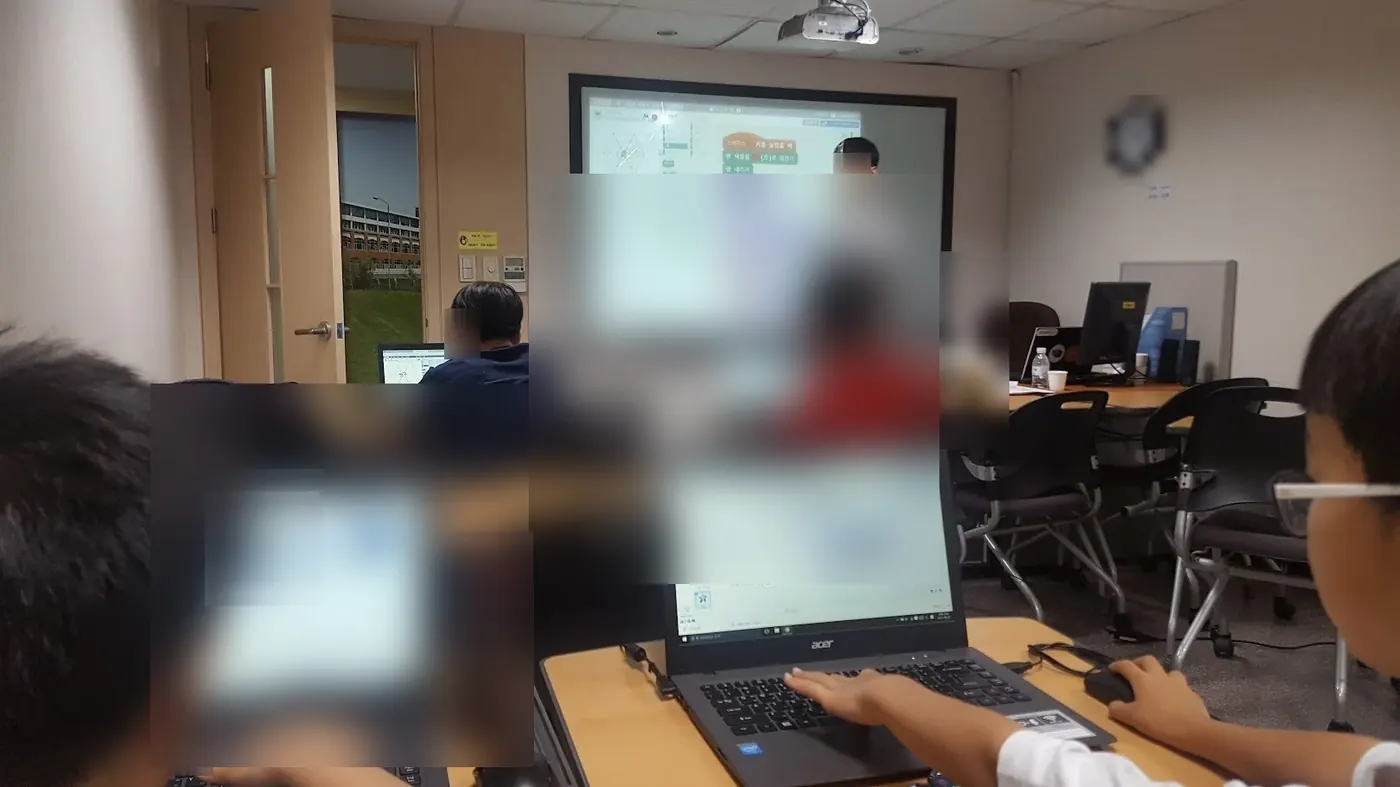
What counts as useful evidence?
A limited-autonomy rescue robot with a control screen, multi-sensor logs and fault-test records, and an evaluation report and debugging demo.
What should an admissions reader be able to see?
The student sets their own question, then designs and tests a feature, model, interface, or solution of their own. In an application or interview, the student separates the material they drew on from their own decisions, results, failed attempts, revisions, and limits.
Useful evidence may include a documented dataset, baseline comparison, model evaluation, error analysis, and a clear record of the student's own decisions.
The evidence an application reads is what the student understood, completed, and can explain.
Which sources were reviewed?
Catalog reviewed: 2026-10-03
Questions parents search before choosing this course
Is AI + Robotics: Autonomous Systems Lab a good fit for middle school students in Grades 6-8?
AI + Robotics: Autonomous Systems Lab is a good fit for students in grades 6-8 who are interested in grid-map path planning and marker-based object detection. CIT offers online or in-person lessons in Apgujeong, Gangnam, Seoul, in one-to-one or small-group formats. Students make a limited-autonomy rescue robot with a control screen, multi-sensor logs and fault-test records, and an evaluation report and debugging demo.
Can my child take AI + Robotics: Autonomous Systems Lab online or in person, one-to-one or in a small group?
Yes. CIT offers online and in-person lessons at its Apgujeong academy in Gangnam, Seoul, with one-to-one and small-group options. A readiness consultation confirms the available format and starting point for the course.
Does my child need prior subject knowledge or coding experience for AI + Robotics: Autonomous Systems Lab?
Beginners can use guided templates. Comfort with ratios, tables, or simple graphs is helpful. Students should be ready to revise work after feedback.
What will my child make or practice in AI + Robotics: Autonomous Systems Lab?
The main evidence is a limited-autonomy rescue robot with a control screen, multi-sensor logs and fault-test records, and an evaluation report and debugging demo. Students also document decisions, tests, feedback, and limits in age-appropriate language.
How can a student describe work from AI + Robotics: Autonomous Systems Lab in a college application?
The student sets their own question, then designs and tests a feature, model, interface, or solution of their own. In an application or interview, the student separates the material they drew on from their own decisions, results, failed attempts, revisions, and limits. Useful evidence may include a documented dataset, baseline comparison, model evaluation, error analysis, and a clear record of the student's own decisions.
How are the schedule and tuition for AI + Robotics: Autonomous Systems Lab determined?
CIT confirms the student's readiness, goal, location, class size, and current availability before recommending a course plan. The consultation and level check are free; tuition is explained before enrollment.
When should a student start?
There is no fixed intake month. CIT reviews the student's current school term, readiness, and available hours, then names the point in the course where they should begin.
I appreciated that a simple early idea was extended into an 'AI debate tool'. My child has always been interested in debate and social issues, so seeing that interest connect to the project makes me expect a more complete and distinctive result.
Where else parents check CIT
Choose the course after a readiness check
CIT can compare this course with nearby options by age, subject, and current preparation.