College application research evidence · understanding and original contribution · Seoul and online
Project courseThe student keeps the work and the record they made.
Quantum Physics Lab with Python
Placement by readiness: qubit superposition, qubit...
- Free consultation and level check
- Apgujeong classroom or online
- One-to-one or small group
- Registered academy no. 11882

Is Quantum Physics Lab with Python a good fit for students placed by current readiness?
Quantum Physics Lab with Python is a good fit for students whose starting point should be set by current readiness who are interested in qubit superposition and qubit motion on the Bloch sphere. CIT offers online or in-person lessons in Apgujeong, Gangnam, Seoul, in one-to-one or small-group formats. Students make experiment scripts with result plots and a final project folder that reruns with one command.
Students install QuTiP, a Python toolkit for quantum simulation, build basis and superposition states in code, and print their vectors, measurement probabilities, and the effect of Pauli operators. They drive a qubit with a Hamiltonian, plot its oscillations, and trace its path on the Bloch sphere, then model energy relaxation and phase noise in an open system and two-qubit Bell states. The final project is a folder of code, plots, and a README that rebuilds every result with one command. The student sets their own question, then designs and tests a feature, model, interface, or solution of their own. In an application or interview, the student separates the material they drew on from their own decisions, results, failed attempts, revisions, and limits.
Google sign-in is required. Existing account permissions determine access.
I appreciated that a simple early idea was extended into an 'AI debate tool'. My child has always been interested in debate and social issues, so seeing that interest connect to the project makes me expect a more complete and distinctive result.
- Age group
- Placement by readiness
- Academic subject
- Physics & Space, Research & PortfolioBrowse subject
- Course type
- Course
- Format
- Online or Apgujeong in person · one-to-one or small group
- Teaching language
- Korean by default, with complete English materials
- Curriculum status
- Learning studioA structured learning studio with goals, deliverables, and follow-up work is available. Tutors confirm supporting materials before delivery.
From open research to student-owned work
Students inspect a relevant public source, reproduce the idea, then add an original question, feature, or test. Every source is public, and each lesson names the exact page it opens.
How can I explain this course to my child?
If questions about qubit superposition or qubit motion on the Bloch sphere keep making you ask why, Quantum Physics Lab with Python lets you investigate the question with evidence, then build and defend an extension of your own.
Which interests suggest this course?
- qubit superposition
- qubit motion on the Bloch sphere
- noise in open quantum systems
What does the student finish?Experiment scripts with result plots and a final project folder that reruns with one command.
Is this a good fit?
A strong fit for students considering physics, aerospace, astronomy, engineering, or computational science.
Placement follows a short readiness check.
Beginners may start with guided templates.
More experienced students receive a deeper implementation path.
What will my child learn?
- Create basis and superposition states in code and check that measurement probabilities sum to one.
- Explain from plotted data how drive strength changes a qubit's oscillation period.
- Compare how energy relaxation and phase noise reduce purity and coherence using density matrices.
- Build a Bell state and compare the purity of the full state with that of one qubit.
How does the course progress?
- 1Quantum States in Code
Print the vectors and dimensions of two basis states and compare superposition probabilities before and after Pauli operators.
- 2Qubits That Change Over Time
Compute qubit oscillations from a Hamiltonian and draw trajectories for different drive strengths on the Bloch sphere.
- 3Open Quantum Systems
Compare pure and mixed states with density matrices and compute how relaxation and phase noise blur interference.
- 4Two-Qubit Experiments and Final Project
Compute a Bell state and excitation moving between coupled qubits, then design and finish an open-system experiment.
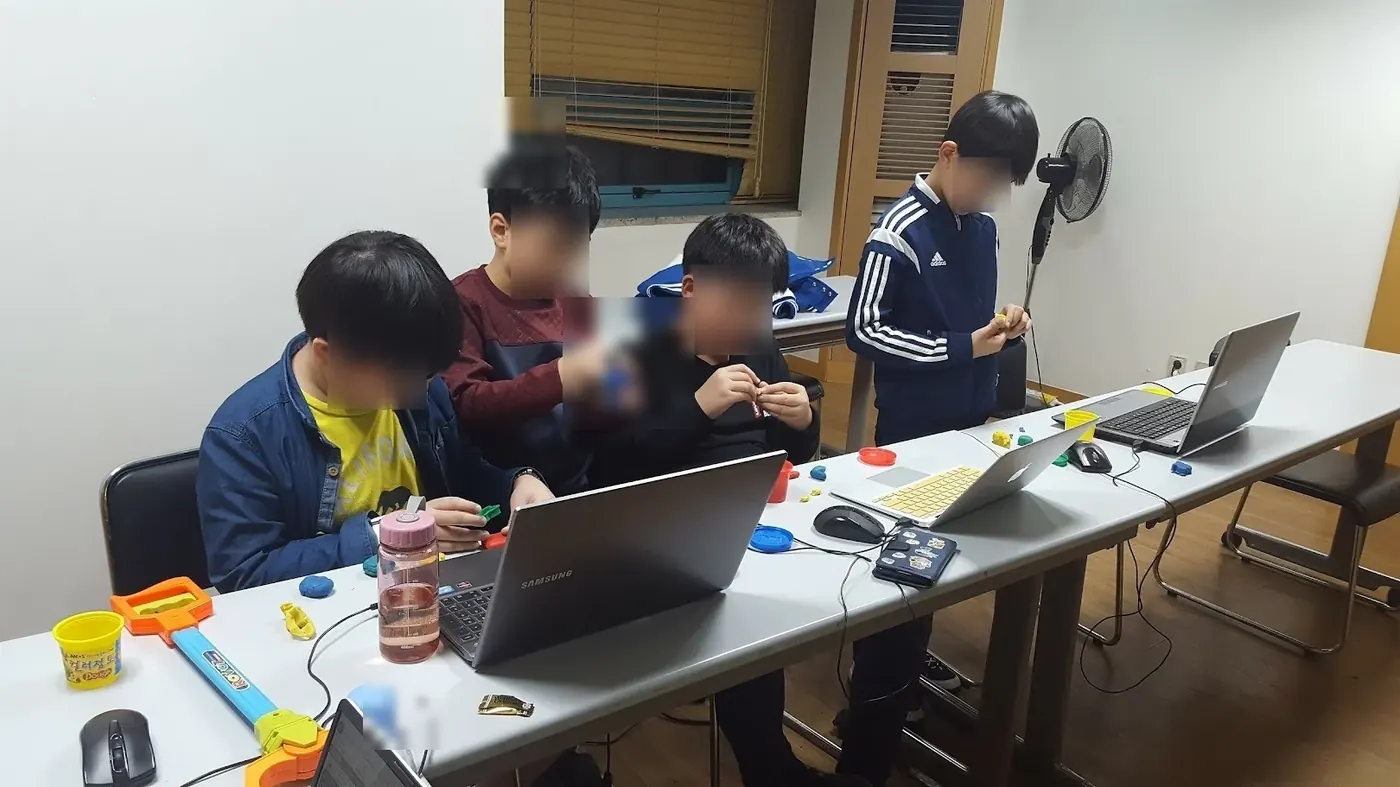
What counts as useful evidence?
Experiment scripts with result plots and a final project folder that reruns with one command.
What should an admissions reader be able to see?
The student sets their own question, then designs and tests a feature, model, interface, or solution of their own. In an application or interview, the student separates the material they drew on from their own decisions, results, failed attempts, revisions, and limits.
Useful evidence may include a reproducible simulation, parameter study, uncertainty analysis, physics explanation, and a comparison with expected behavior.
The evidence an application reads is what the student understood, completed, and can explain.
Questions parents search before choosing this course
Is Quantum Physics Lab with Python a good fit for students placed by current readiness?
Quantum Physics Lab with Python is a good fit for students whose starting point should be set by current readiness who are interested in qubit superposition and qubit motion on the Bloch sphere. CIT offers online or in-person lessons in Apgujeong, Gangnam, Seoul, in one-to-one or small-group formats. Students make experiment scripts with result plots and a final project folder that reruns with one command.
Can my child take Quantum Physics Lab with Python online or in person, one-to-one or in a small group?
Yes. CIT offers online and in-person lessons at its Apgujeong academy in Gangnam, Seoul, with one-to-one and small-group options. A readiness consultation confirms the available format and starting point for the course.
Does my child need prior subject knowledge or coding experience for Quantum Physics Lab with Python?
Placement follows a short readiness check. Beginners may start with guided templates. More experienced students receive a deeper implementation path.
What will my child make or practice in Quantum Physics Lab with Python?
The main evidence is experiment scripts with result plots and a final project folder that reruns with one command. Students also document decisions, tests, feedback, and limits in age-appropriate language.
How can a student describe work from Quantum Physics Lab with Python in a college application?
The student sets their own question, then designs and tests a feature, model, interface, or solution of their own. In an application or interview, the student separates the material they drew on from their own decisions, results, failed attempts, revisions, and limits. Useful evidence may include a reproducible simulation, parameter study, uncertainty analysis, physics explanation, and a comparison with expected behavior.
How are the schedule and tuition for Quantum Physics Lab with Python determined?
CIT confirms the student's readiness, goal, location, class size, and current availability before recommending a course plan. The consultation and level check are free; tuition is explained before enrollment.
When should a student start?
There is no fixed intake month. CIT reviews the student's current school term, readiness, and available hours, then names the point in the course where they should begin.
The teachers are always attentive and considerate, so we feel comfortable trusting them with our child.
Where else parents check CIT
Choose the course after a readiness check
CIT can compare this course with nearby options by age, subject, and current preparation.