Future college-application foundation · student questions and explanations · Seoul and online
Early foundationA first course for younger elementary students.
Count Energy Use and Make a Green City Blueprint
Early years to Grade 2: the electricity a city uses...
- Free consultation and level check
- Apgujeong classroom or online
- One-to-one or small group
- Registered academy no. 11882

Is Count Energy Use and Make a Green City Blueprint a good fit for young learners through Grade 2?
Count Energy Use and Make a Green City Blueprint is a good fit for students in early years to grade 2 who are interested in the electricity a city uses and solar power math. CIT offers online or in-person lessons in Apgujeong, Gangnam, Seoul, in one-to-one or small-group formats. Students make an electricity-use table and bar graph and a zero-energy city blueprint in 3D.
The course opens with counting where electricity is used at home and school and for how many hours; children turn the counts into a table and a bar graph and look for ways to cut back at the biggest user. They set how much one solar panel makes, work out how many panels are needed, and choose what a fixed budget can buy and what to switch off first in a shortage. At the end they map homes, schools, and power plants, build the city with a 3D tool, rebalance the electricity used and made, and present a zero-energy city blueprint. This builds the foundation a college application later rests on: the student asks a question, makes something, revises it, and explains that process in their own words. At this age the habit comes before the artifact.
Google sign-in is required. Existing account permissions determine access.
As soon as my child got home, they showed me the game they had made. They said it was so much fun.
- Age group
- Early years to Grade 2
- Academic subject
- Engineering & RoboticsBrowse subject
- Course type
- Course
- Format
- Online or Apgujeong in person · one-to-one or small group
- Teaching language
- Korean by default, with complete English materials
- Curriculum status
- Learning studioA structured learning studio with goals, deliverables, and follow-up work is available. Tutors confirm supporting materials before delivery.
From open research to student-owned work
Students inspect a relevant public source, reproduce the idea, then add an original question, feature, or test. Every source is public, and each lesson names the exact page it opens.
How can I explain this course to my child?
If exploring the electricity a city uses or solar power math makes you want to build instead of only watch or read, Count Energy Use and Make a Green City Blueprint lets you make, test, and improve something of your own.
Which interests suggest this course?
- the electricity a city uses
- solar power math
- 3D city design
What does the student finish?An electricity-use table and bar graph and a zero-energy city blueprint in 3D.
Is this a good fit?
A strong fit for students interested in robotics, mechanical or electrical engineering, product design, and autonomous systems.
No prior coding is required.
The child should be ready to describe choices and ask for help.
A parent may help with accounts or device setup.
What will my child learn?
- Count where and how long electricity is used and organize the numbers in a table and bar graph.
- Calculate how many solar panels are needed from the output of one panel.
- Choose within a fixed budget and decide, with reasons, what to switch off first in a shortage.
- Recalculate the energy a 3D city uses and makes, and fix the layout.
How does the course progress?
- 1Counting What a City Uses
List what a city uses each day and count where and how long electricity is used at home and school.
- 2Seeing Numbers as Pictures
Turn the table into a bar graph, find the biggest user, and work out how many solar panels are needed.
- 3Choosing on a Limited Budget
Pick what the budget can buy, set what to switch off first in a shortage, and map the city layout.
- 4Making a Blueprint
Build the city with a 3D tool, rebalance the energy used and made, and present the blueprint.
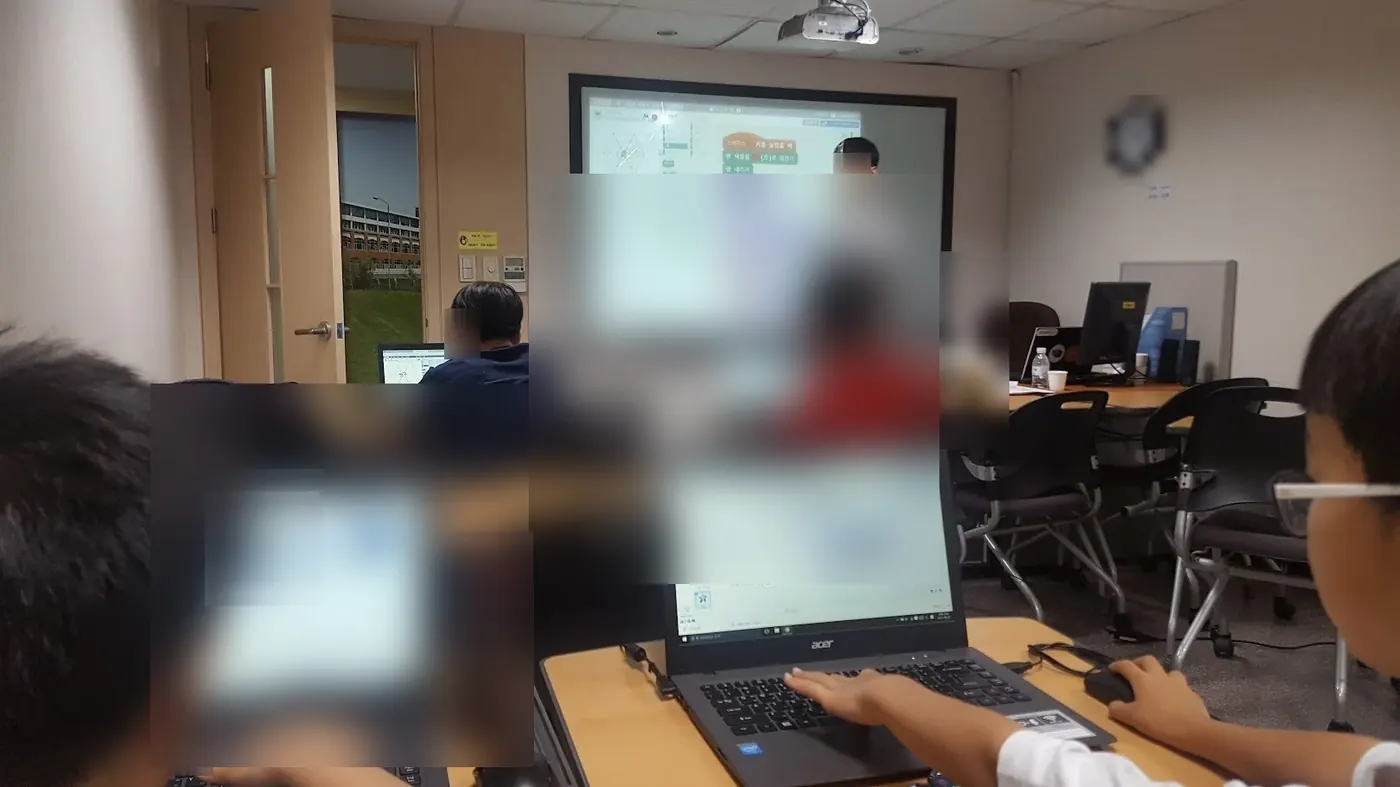
What counts as useful evidence?
An electricity-use table and bar graph and a zero-energy city blueprint in 3D.
What should an admissions reader be able to see?
This builds the foundation a college application later rests on: the student asks a question, makes something, revises it, and explains that process in their own words. At this age the habit comes before the artifact.
Useful evidence may include a feature and controls the student designed, normal and failure tests, and a revision based on measured results.
The evidence an application reads is what the student understood, completed, and can explain.
Questions parents search before choosing this course
Is Count Energy Use and Make a Green City Blueprint a good fit for young learners through Grade 2?
Count Energy Use and Make a Green City Blueprint is a good fit for students in early years to grade 2 who are interested in the electricity a city uses and solar power math. CIT offers online or in-person lessons in Apgujeong, Gangnam, Seoul, in one-to-one or small-group formats. Students make an electricity-use table and bar graph and a zero-energy city blueprint in 3D.
Can my child take Count Energy Use and Make a Green City Blueprint online or in person, one-to-one or in a small group?
Yes. CIT offers online and in-person lessons at its Apgujeong academy in Gangnam, Seoul, with one-to-one and small-group options. A readiness consultation confirms the available format and starting point for the course.
Does my child need prior subject knowledge or coding experience for Count Energy Use and Make a Green City Blueprint?
No prior coding is required. The child should be ready to describe choices and ask for help. A parent may help with accounts or device setup.
What will my child make or practice in Count Energy Use and Make a Green City Blueprint?
The main evidence is an electricity-use table and bar graph and a zero-energy city blueprint in 3D. Students also document decisions, tests, feedback, and limits in age-appropriate language.
How does my child explain what they made in Count Energy Use and Make a Green City Blueprint?
Children show what they made and explain in their own words why they chose it, what happened when they tried it, and what they changed. At this age, the habit of asking and revising comes before the finished product.
How are the schedule and tuition for Count Energy Use and Make a Green City Blueprint determined?
CIT confirms the student's readiness, goal, location, class size, and current availability before recommending a course plan. The consultation and level check are free; tuition is explained before enrollment.
When should a student start?
There is no fixed intake month. CIT reviews the student's current school term, readiness, and available hours, then names the point in the course where they should begin.
I worried because it was hard to explain to my child why they should learn coding. Being with friends seems to make the classes enjoyable for them.
Where else parents check CIT
Choose the course after a readiness check
CIT can compare this course with nearby options by age, subject, and current preparation.