College application academic evidence · reasoning and revision · Seoul and online
Exam prepAimed at an AP, IB, or IGCSE exam score.
Cambridge IGCSE Additional Mathematics (0606)
Grades 9-12: the factor theorem, trigonometric...
- Free consultation and level check
- Apgujeong classroom or online
- One-to-one or small group
- Registered academy no. 11882
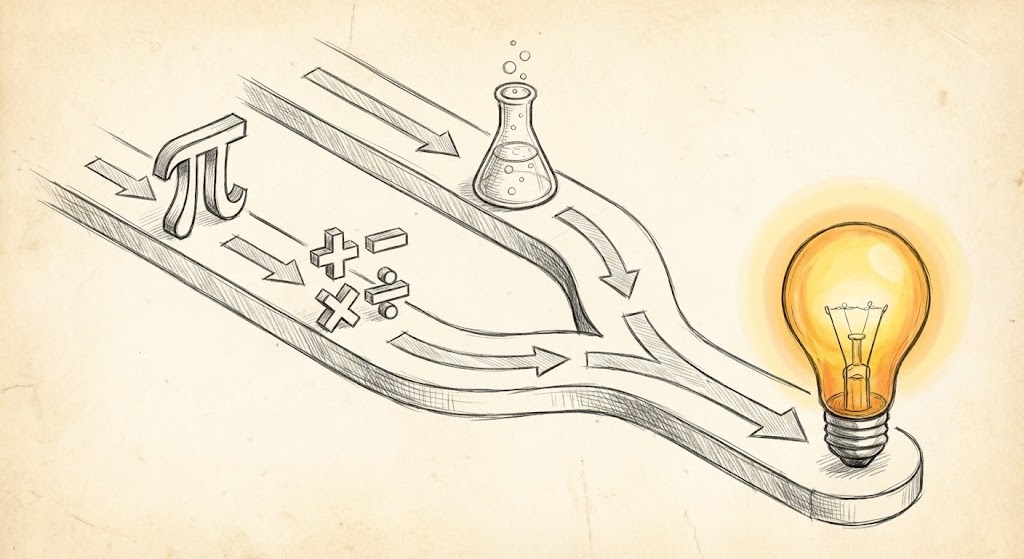
Is Cambridge IGCSE Additional Mathematics (0606) a good fit for high school students in Grades 9-12?
Cambridge IGCSE Additional Mathematics (0606) is a good fit for students in grades 9-12 who are interested in the factor theorem and trigonometric identities. CIT offers online or in-person lessons in Apgujeong, Gangnam, Seoul, in one-to-one or small-group formats. Students make algebra and calculus solutions written one step per line and corrected answers with the faulty step marked.
Additional Mathematics starts with functions, quadratics, and the factor theorem, then works through logarithms and exponentials, the coordinate geometry of lines and circles, radians and trigonometric identities, permutations and combinations, series, and two-dimensional vectors, finishing with differentiation and integration. Long solutions are written one algebraic step per line, which makes a mistaken line easy to find. Alongside the score, the student builds the academic evidence an application can use: how they applied a core idea, why an answer failed, and how they revised it.
This public guide describes the intended direction. A dedicated learning studio is not available yet.
My child loved that the teacher explained things really well and made the lesson enjoyable. We are very glad too.
- Age group
- Grades 9-12
- Academic subject
- Mathematics & StatisticsBrowse subject
- Course type
- Exam preparation
- Format
- Online or Apgujeong in person · one-to-one or small group
- Teaching language
- Korean by default, with complete English materials
- Curriculum status
- Planned courseThis subject is available for consultation, but a teachable lesson sequence is not yet published.
How can I explain this course to my child?
If you want to understand the important ideas behind the factor theorem instead of memorizing answers, Cambridge IGCSE Additional Mathematics (0606) connects trigonometric identities to exam-ready reasoning and a record of how you fixed mistakes.
Which interests suggest this course?
- the factor theorem
- trigonometric identities
- first steps in calculus
What does the student finish?Algebra and calculus solutions written one step per line and corrected answers with the faulty step marked.
Is this a good fit?
A strong fit for students who need stronger mathematical foundations or want to apply mathematics in science, AI, economics, or research.
Current study of, or planned preparation for, Cambridge IGCSE Additional Mathematics (0606).
A short diagnostic review sets the starting point.
Progress depends on regular practice and acting on feedback.
What will my child learn?
- Explain how graphs and roots relate using composite and inverse functions and the discriminant of a quadratic.
- Factorize polynomials with the factor and remainder theorems and solve simultaneous equations and inequalities.
- Solve sector and trigonometric equation problems with radians and trigonometric identities.
- Solve rate and stationary point problems with differentiation, and find areas and motion with definite integrals.
Which units does the official course cover?
- 1Functions
Find domain and range and composite and inverse functions, and sketch graphs of modulus functions.
- 2Quadratic Functions
Complete the square to find the vertex, and use the discriminant to count roots and intersections.
- 3Factors of Polynomials
Factorize cubic polynomials and solve cubic equations with the factor and remainder theorems.
- 4Equations, Inequalities and Graphs
Solve modulus equations and quadratic and cubic inequalities, reading solution ranges from graphs.
- 5Simultaneous Equations
Solve pairs of equations where one is linear and the other quadratic, by substitution.
- 6Logarithmic and Exponential Functions
Solve exponential equations with the laws of logarithms, and compare exponential and logarithmic graphs.
- 7Straight Line Graphs
Find lengths, midpoints, and gradients, and use logarithms to turn curved relationships into straight lines.
- 8Coordinate Geometry of the Circle
Find the equation of a circle, where a line meets it, and the equations of its tangents.
- 9Circular Measure
Measure angles in radians and find arc lengths and sector areas.
- 10Trigonometry
Learn the graphs and identities of all six trigonometric functions and solve trigonometric equations.
- 11Permutations and Combinations
Count arrangements and selections, deciding when order matters and when it does not.
- 12Series
Expand with the binomial theorem and sum arithmetic, geometric, and infinite geometric series.
- 13Vectors in Two Dimensions
Work with position vectors, magnitudes, and unit vectors, and add and scale vectors to solve problems.
- 14Differentiation and Integration
Differentiate a range of functions for tangents and stationary points, and integrate for area, velocity, and displacement.
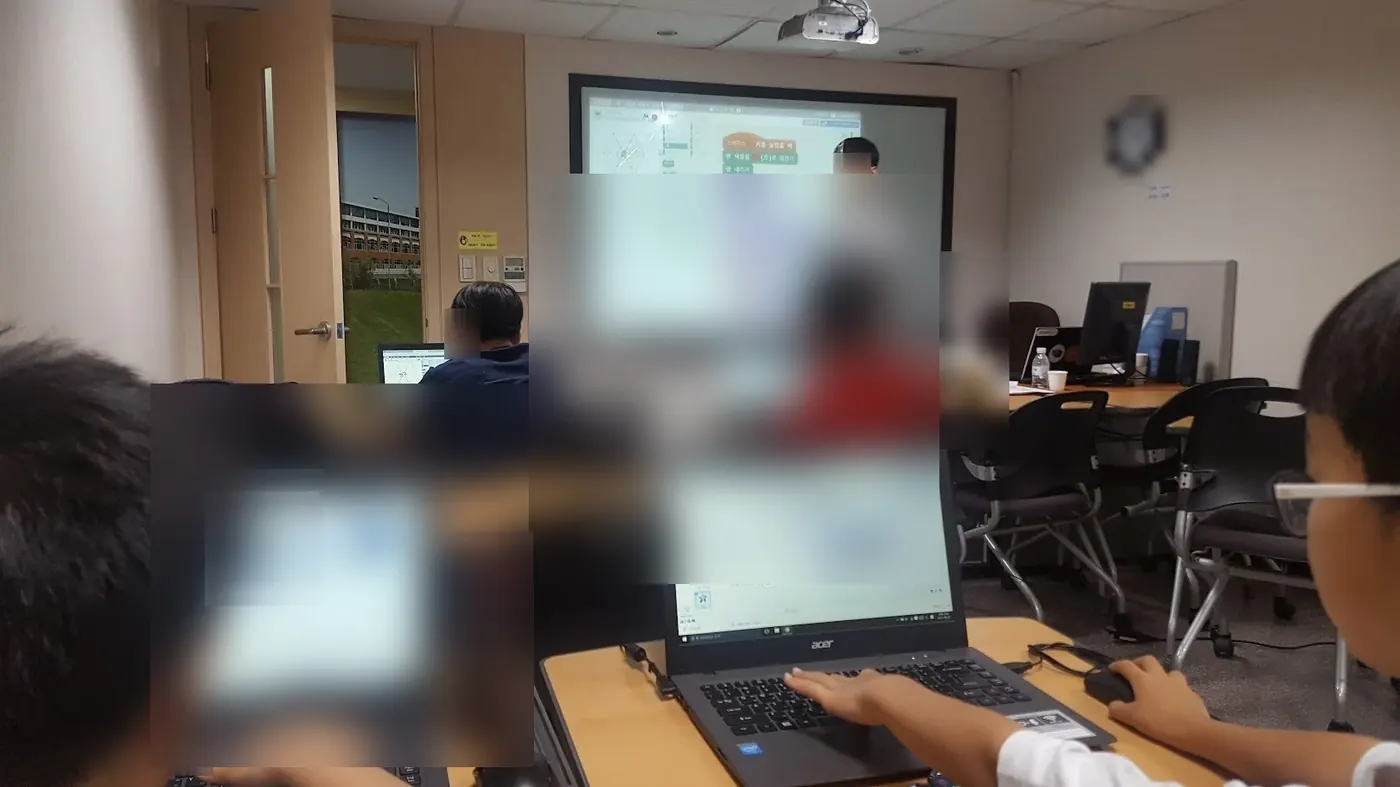
What counts as useful evidence?
Algebra and calculus solutions written one step per line and corrected answers with the faulty step marked.
What should an admissions reader be able to see?
Alongside the score, the student builds the academic evidence an application can use: how they applied a core idea, why an answer failed, and how they revised it.
Useful evidence may include a clear model, justified assumptions, correct calculations, visualized data, and an explanation of uncertainty.
The evidence an application reads is what the student understood, completed, and can explain.
Which sources were reviewed?
Catalog reviewed: 2026-09-30
Questions parents search before choosing this course
Is Cambridge IGCSE Additional Mathematics (0606) a good fit for high school students in Grades 9-12?
Cambridge IGCSE Additional Mathematics (0606) is a good fit for students in grades 9-12 who are interested in the factor theorem and trigonometric identities. CIT offers online or in-person lessons in Apgujeong, Gangnam, Seoul, in one-to-one or small-group formats. Students make algebra and calculus solutions written one step per line and corrected answers with the faulty step marked.
Can my child take Cambridge IGCSE Additional Mathematics (0606) online or in person, one-to-one or in a small group?
Yes. CIT offers online and in-person lessons at its Apgujeong academy in Gangnam, Seoul, with one-to-one and small-group options. A readiness consultation confirms the available format and starting point for the course.
Does my child need prior subject knowledge or coding experience for Cambridge IGCSE Additional Mathematics (0606)?
Current study of, or planned preparation for, Cambridge IGCSE Additional Mathematics (0606). A short diagnostic review sets the starting point. Progress depends on regular practice and acting on feedback.
What will my child make or practice in Cambridge IGCSE Additional Mathematics (0606)?
The main evidence is algebra and calculus solutions written one step per line and corrected answers with the faulty step marked. Students also document decisions, tests, feedback, and limits in age-appropriate language.
How does Cambridge IGCSE Additional Mathematics (0606) exam preparation work?
CIT starts with a short diagnostic, then works through the units in order, from Functions to Differentiation and Integration, reviewing errors and improving exam-style responses. Practice is adapted to the student's current syllabus and readiness.
How are the schedule and tuition for Cambridge IGCSE Additional Mathematics (0606) determined?
CIT confirms the student's readiness, goal, location, class size, and current availability before recommending a course plan. The consultation and level check are free; tuition is explained before enrollment.
When should a student start?
The exam date is set by the school or the exam board, so the time left decides how many units the student can cover and how much practice fits. CIT checks the remaining weeks first, then proposes a starting unit.
At first my child did not want to go, because it was a weekend class. After the lesson they said it had been fun. Hearing that they ask about anything they do not understand and take part on their own put me at ease as a parent.
Where else parents check CIT
Choose the course after a readiness check
CIT can compare this course with nearby options by age, subject, and current preparation.