College application research evidence · understanding and original contribution · Seoul and online
Project courseThe student keeps the work and the record they made.
Reading Emotion: Grades 6-8
Grades 6-8: YouTube thumbnails and intros, the limits of...
Where this course comes fromThe universities and labs named here made the open projects or materials this course draws on. CIT designed the course independently; it is not an official, affiliated, or endorsed course of those institutions.
- Stanford UniversityOpen research referenced
- MITOpen research referenced
- Free consultation and level check
- Apgujeong classroom or online
- One-to-one or small group
- Registered academy no. 11882

Is Reading Emotion: Grades 6-8 a good fit for middle school students in Grades 6-8?
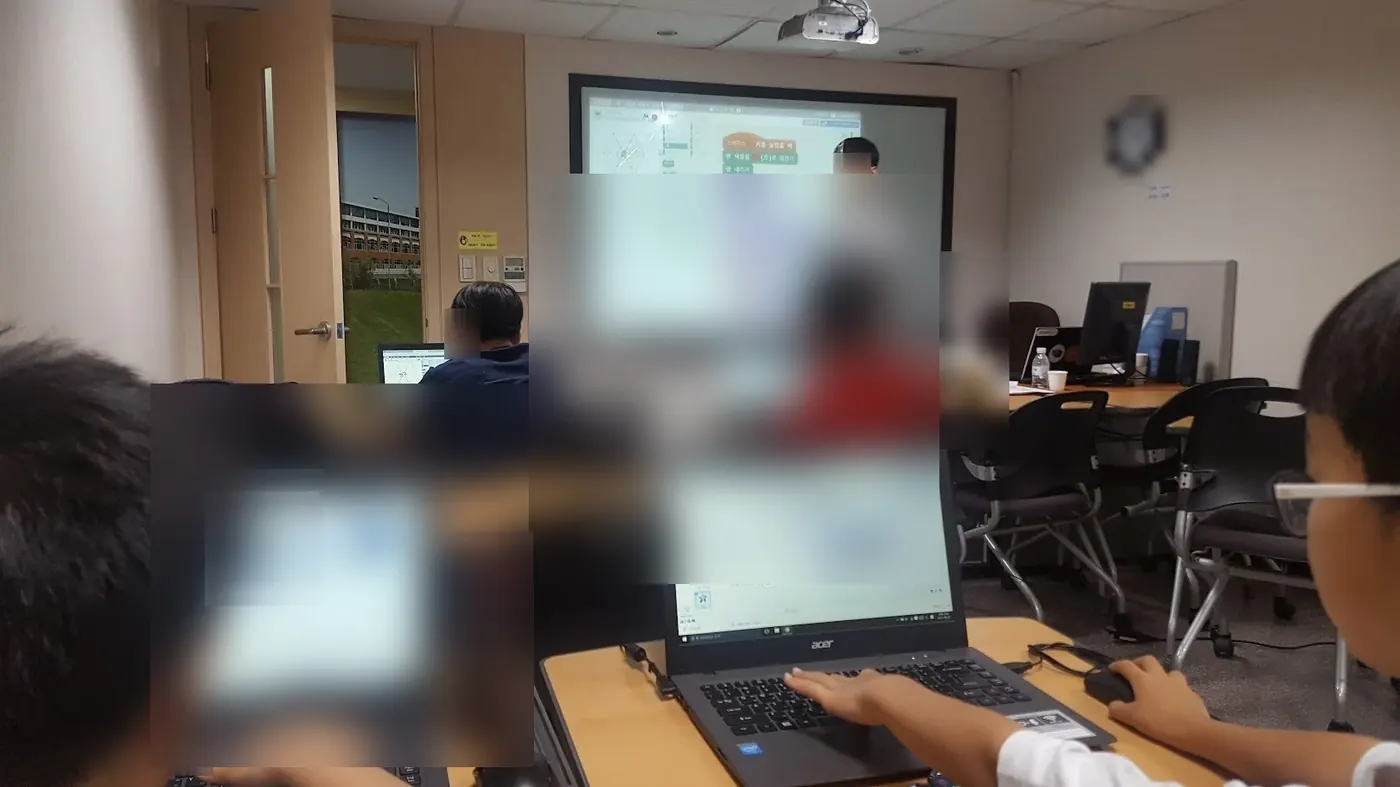
Reading Emotion: Grades 6-8 is a good fit for students in grades 6-8 who are interested in YouTube thumbnails and intros and the limits of emotion-recognition AI. CIT offers online or in-person lessons in Apgujeong, Gangnam, Seoul, in one-to-one or small-group formats. Students make a channel concept demo with thumbnail and intro, a two-layer screen design, and a critical report on emotion-recognition AI.
The course was designed from open research published by Stanford and MIT. Students in Grades 6-8 take apart popular thumbnails, calculate brightness contrast by hand, and work with an AI agent to build two thumbnail versions and a ten-second intro for their own channel concept, choosing between them with feeling tests. They read retention graphs to guess why viewers leave and use blur and edge filters to redesign screens in a far-view layer and a close-view layer. In the last unit they run a public emotion-recognition model on public photos only, never their own, collect its mistakes, and write a critical report on why a facial expression alone cannot settle what someone feels. The student then designs and tests an extension of their own: a new question, feature, model, interface, or solution. In an application or interview, the student separates the source research from their own decisions, results, failed attempts, revisions, and limits.
Google sign-in is required. Existing account permissions determine access.
My child loved that the teacher explained things really well and made the lesson enjoyable. We are very glad too.
- Age group
- Grades 6-8
- Academic subject
- Engineering & Robotics, Arts, Media & DesignBrowse subject
- Course type
- Course
- Format
- Online or Apgujeong in person · one-to-one or small group
- Teaching language
- Korean by default, with complete English materials
- Curriculum status
- Learning studioA structured learning studio with goals, deliverables, and follow-up work is available. Tutors confirm supporting materials before delivery.
From open research to student-owned work
Students inspect a relevant public source, reproduce the idea, then add an original question, feature, or test. The material this course reads was made at Stanford University, MIT. Names identify the source, not affiliation or endorsement.
- Stanford UniversityOpen research referenced
- MITOpen research referenced
How can I explain this course to my child?
If questions about YouTube thumbnails and intros or the limits of emotion-recognition AI keep making you ask why, Reading Emotion: Grades 6-8 lets you investigate the question with evidence, then build and defend an extension of your own.
Which interests suggest this course?
- YouTube thumbnails and intros
- the limits of emotion-recognition AI
- why viewers leave a video
What does the student finish?A channel concept demo with thumbnail and intro, a two-layer screen design, and a critical report on emotion-recognition AI.
Is this a good fit?
A strong fit for students interested in robotics, mechanical or electrical engineering, product design, and autonomous systems.
Beginners can use guided templates.
Comfort with ratios, tables, or simple graphs is helpful.
Students should be ready to revise work after feedback.
What will my child learn?
- Calculate brightness contrast and use squint and shrink tests to make a thumbnail that still reads on a small screen.
- Match drops in a retention graph to parts of the story and form a hypothesis about why viewers leave.
- Explain what blur and edge filters keep, using the bass and treble of sound as a comparison.
- Use failure cases of emotion-recognition AI to conclude that a facial expression alone cannot settle an emotion.
- Stanford UniversityOpen research referenced
- MITOpen research referenced
How does the course progress?
- 1YouTube Project I: Thumbnails
Analyze popular thumbnails, calculate contrast, build thumbnail A and B versions, and revise them with squint and shrink tests.
- 2YouTube Project II: Hooks and Viewer Flow
Design the mood of the first ten seconds, read retention graphs, and finish an intro web demo and a channel concept demo.
- 3The Bass and Treble of Images
Separate soft areas from outlines with blur and edge filters, then add a sharpness column to the mapping table and rebuild the screens.
- 4Critiquing Emotion-Recognition AI
Test an emotion-recognition model on public photos, gather its failures, compare them with Lisa Feldman Barrett's argument, and write a report.
What counts as useful evidence?
A channel concept demo with thumbnail and intro, a two-layer screen design, and a critical report on emotion-recognition AI.
What should an admissions reader be able to see?
The course was designed from open research published by Stanford and MIT. The student works out what those researchers were trying to learn, why the question matters, and how they tested it, then designs and tests an extension of their own: a new question, feature, model, interface, or solution. In an application or interview, the student separates the source research from their own decisions, results, failed attempts, revisions, and limits.
Useful evidence may include the research question the student understood, a feature and operator interface they designed, normal and failure tests, and a revision based on measured results. A bounded LLM component counts only when its data, authority, and human-approval limits are tested.
These names identify who published the open project the course starts from. The evidence an application reads is what the student understood, completed, and can explain.
Which sources were reviewed?
Catalog reviewed: 2026-09-30
- Stanford UniversityOpen research referenced
- MITOpen research referenced
Questions parents search before choosing this course
Is Reading Emotion: Grades 6-8 a good fit for middle school students in Grades 6-8?
Reading Emotion: Grades 6-8 is a good fit for students in grades 6-8 who are interested in YouTube thumbnails and intros and the limits of emotion-recognition AI. CIT offers online or in-person lessons in Apgujeong, Gangnam, Seoul, in one-to-one or small-group formats. Students make a channel concept demo with thumbnail and intro, a two-layer screen design, and a critical report on emotion-recognition AI.
Can my child take Reading Emotion: Grades 6-8 online or in person, one-to-one or in a small group?
Yes. CIT offers online and in-person lessons at its Apgujeong academy in Gangnam, Seoul, with one-to-one and small-group options. A readiness consultation confirms the available format and starting point for the course.
Does my child need prior subject knowledge or coding experience for Reading Emotion: Grades 6-8?
Beginners can use guided templates. Comfort with ratios, tables, or simple graphs is helpful. Students should be ready to revise work after feedback.
What will my child make or practice in Reading Emotion: Grades 6-8?
The main evidence is a channel concept demo with thumbnail and intro, a two-layer screen design, and a critical report on emotion-recognition AI. Students also document decisions, tests, feedback, and limits in age-appropriate language.
How can Reading Emotion: Grades 6-8 show research understanding in a college application?
The course was designed from open research published by Stanford and MIT. The student works out what those researchers were trying to learn, why the question matters, and how they tested it, then designs and tests an extension of their own: a new question, feature, model, interface, or solution. In an application or interview, the student separates the source research from their own decisions, results, failed attempts, revisions, and limits. Useful evidence may include the research question the student understood, a feature and operator interface they designed, normal and failure tests, and a revision based on measured results. A bounded LLM component counts only when its data, authority, and human-approval limits are tested.
How are the schedule and tuition for Reading Emotion: Grades 6-8 determined?
CIT confirms the student's readiness, goal, location, class size, and current availability before recommending a course plan. The consultation and level check are free; tuition is explained before enrollment.
When should a student start?
There is no fixed intake month. CIT reviews the student's current school term, readiness, and available hours, then names the point in the course where they should begin.
The teachers are always attentive and considerate, so we feel comfortable trusting them with our child.
Where else parents check CIT
Choose the course after a readiness check
CIT can compare this course with nearby options by age, subject, and current preparation.