Chunk b basics
📚 Understanding the Core Concepts
🧩 What is an Object? (review)
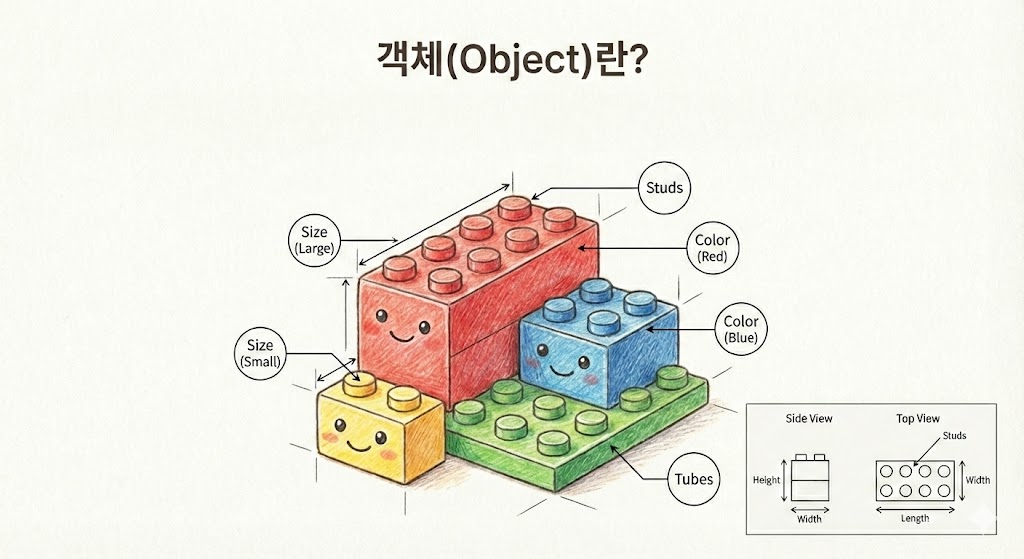
- having both properties and behavior a LEGO block properties and behaviors.
- Variables hold properties, functions hold the instructions for behavior, and an object combines the two.
- Ursina's Entity is
model,color,scale: properties likeanimate_position()and an object with methods like
Before learning the code, let's first understand some important concepts!
Loops are a really useful tool! They can spin like a carousel and repeat the same thing! 🎠
What is a Loop (For Loop)? 🔄
Loopsis used when you want to run the same code multiple times!
Just like a carouselLike this, it spins a set number of times, repeating the same thing! 🎠
🎠 Understanding it with the carousel analogy
A loop is like a carousel!
- A carousel spins a set number of times (e.g., 8 turns)
- The same music plays on every turn
- A loop also spins a set number of times, running the same code!
Why do we use loops?
Without loops, you'd have to copy and paste the same code over and over. 😓
# Without a loop (inefficient) approach
print("Hi!")
print("Hi!")
print("Hi!")

# Using a loop (efficient) approach
for i in range(3):
    print("Hi!")
Using a loop makes the code much shorter and cleaner! ✨
What is the range() function? 🏭
range() A function Number factoryit is! 🏭
If you order "make me 5!" at the number factory, it produces the numbers 0, 1, 2, 3, 4!
🏭 The number factory analogy
range() is like a factory that stamps out numbers!
range(5)= "Make me 5 numbers!" → produces 0, 1, 2, 3, 4! 🏭range(8)= "Make me 8 numbers!" → produces 0, 1, 2, 3, 4, 5, 6, 7! 🏭
Just like a factory stamping out numbers, range() the function produces numbers too!
| Code | the numbers the number factory makes | Number of repetitions |
|---|---|---|
range(3) |
0, 1, 2 | 3 times 🔄 |
range(5) |
0, 1, 2, 3, 4 | 5 times 🔄 |
range(8) |
0, 1, 2, 3, 4, 5, 6, 7 | 8 times 🔄 |
Why does it start from 0?
In programming, we usually start counting from 0! This is called "0-based indexing."
List positions also start from 0.
Variable iis what? 🧺
the variable used in a loop iis a basket that holds the current numberit is! 🧺
Every time the carousel spins, a new number goes into the basket!
🧺 The basket analogy
Variable iis just like a basket that holds a number!
- First turn: 0 goes into the basket 🧺 →
i = 0 - Second turn: 1 goes into the basket 🧺 →
i = 1 - Third turn: 2 goes into the basket 🧺 →
i = 2
The number in the basket changes on every turn!
Think of it as a counter too
iis a counteryou can also think of it as!
- Turn 1: "This is turn 0!"
- Turn 2: "This is turn 1!"
- Turn 3: "This is turn 2!"
Why Indentation Matters 🏠
In Python, Indentationis very important!
Indentation the loop's roomit is! 🏠
Only the code inside the room runs repeatedly!
🏠 The loop's room analogy
A loop is just like a house!
for i in range(3):
    print(i)      # 🏠 Code inside the room (repeated)
    print(i * 2)  # 🏠 Code inside the room (repeated)

print("Done!")      # 🚪 Code outside the room (runs only once)
- Inside the room (indented): runs repeatedly! 🔄
- Outside the room (not indented): runs only once!
🚨 If you don't indent, you'll get an error!
# Correct way ✅
for i in range(3):
    print(i)      # 🏠 Inside the room, so it repeats
    print(i * 2)  # 🏠 Inside the room, so it repeats

# Wrong way ❌
for i in range(3):
print(i)  # 🚪 Outside the room, so it errors out!
You usually use 4 spaces or 1 tab to make the room! 🏠